

What is a Research Panel and is it Necessary for Market Research
What is a Research Panel and is it Necessary for Market Research

A research panel is a frequently used means for conducting research, including market research (the study of your customers). This method involves studying the same group of opted-in participants through various methods and stages that are developed as part of a research campaign.
The technique that underpins a research panel counters organic sampling, which seeks out research participants, particularly survey respondents, in their natural digital habitats. As such, a research panel is an alternative to random sampling and has various differentiations.
You ought to know all the differentiators of research panels, how they stray from organic sampling, as well as what makes a research panel tick.
With this key information at hand, it will make your research endeavors simpler; it will also allow you to choose the best research method. This is a must, considering that there is a wide range of market research techniques. Panels are just one of many.
You may be wondering if panel research is a viable research method for your business needs or research campaign. Or, you may consider using it in tandem with another research technique or tool.

Luckily, we’ve got you covered on this topic.
This article explains the concept of the research panel in full depth, which can serve as a possible avenue market researchers can explore within the vast array of market research techniques.
What is a Research Panel and is it Necessary for Market Research? Table of Contents
- Defining the Research Panel
- The Role of a Research Panel in the Market Research Process
- When to Use a Research Panel</a
- The Pros and Cons of a Research Panel
- Research Panel Examples
- Why Online Polling Software is Better
- The Online Survey Tool: A Stronger Alternative
- What a Machine-Learning and AI-Powered Survey Tool Does for Your Market Research Campaign
- The Ultimate Verdict on the Research Panel for Market Research
Defining the Research Panel
A market research panel is a pre-recruited and pre-screened group of research participants who have opted in to take part as the studied subjects of a market research campaign.
This kind of research method can involve studying its members repeatedly. In this case, the particular study is called a panel study.
It is also referred to as a longitudinal study, although longitudinal studies don’t necessarily need to involve panels, as there can be longitudinal surveys completed by non-panelists.
As such, it is a way of describing those who have agreed to take surveys on an ongoing basis, which, in market research, are typically members of your target market.
You can use a research panel for a wide range of subject matters. The members of the research panel can include a wide range of people across multiple sets of populations.

Whether you seek to study the workforce of a company or a major constituent of a national population, the term research panel can apply to all such groups.
The key is to use participants who represent members of your target market and most importantly your target audience also referred to as your survey target audience. That’s because a research panel is a recruitment method used to get respondents to take your survey.
In market research, the participants in a research panel are usually the people who belong to a business’s consumer base.
Moreover, they belong to a particular audience, known specifically as a survey target audience in survey studies. This label can also apply to research panelists, as they too can be asked to take surveys.
The members making up a research panel must share several traits, such as demographics, psychographics, geographic location and more. A market researcher may also study various segments that make up a target market.
There are various methods researchers can employ in their research campaigns, in which a research panel provides insights. These include:
- Interviews
- Focus groups
- Surveys
- In-home usage tests
- Experimentations
- Test marketing
The Role of a Research Panel in the Market Research Process
A research panel is but one process within the encompassing practice of market research. Some businesses may decide to extract data from a research panel alone, while others may use it alongside probability sampling.
Also called organic sampling, this method involves reaching out to all the individuals who fall under the qualifications of your subjects of study. As such, it allows more individuals to take part in the sample.
Unlike many of the sub-methods of organic sampling, a research panel is not anonymous, in the sense that the panelists’ identities will not be hidden from the researcher.

They are still kept anonymous when it comes to sharing the findings with the public, as you wouldn’t reveal the panelists’ identities.
This allows researchers to study the members at a greater depth, in that researchers can match answers with the respondents themselves. This is due to the nature of pre-recruiting participants; when you do so, you’re going to need to collect information on each panelist, some of which may be personal.
This method will allow you to understand if they’re qualified to partake in your studies. As such, you’re effectively putting names and faces with data, essentially identifying each member. Additionally, this allows you to build a profile on each participant, adding bulk by applying multiple studies.
Forming profiles gives you a glimpse into the presence of personas in your target market. A research panel is the starting point in building a persona.
When you’ve profiled panelists through various means (interviews, focus groups, etc.), you have several kinds of data, from which you can form an analysis and draw conclusions.
You can test the prevalence of these conclusions by surveying other members of your target market, i.e., those who are not in the research panel.
Various survey sampling methods will not only complement your research panel but also give it validity and statistical relevance. After all, there are only so many panelists you can interview or meet with.
Even if you study your research panel via surveys, it is not practical to spend a lofty amount of time vetting people to ensure they fit your research campaign. Thus, a research panel may not be the strongest of the various market research techniques.
When to Use a Research Panel
While businesses and market researchers can use a research panel liberally, it is not always in their best interest. This can be due to the size of a business, a limited budget, the objectives of a research campaign and the length of the research study. There are also times when it makes sense to engage in research yourself and other times in which it may be beneficial to work through a professional market research agency such as IntoTheMinds.

With this in mind, there are particular times in which companies and researchers alike can benefit from using a research panel. These include the following instances:
- Obtaining a constant, in-depth read of a certain group of participants.
- Conducting a more intimate study on a particular group of people.
- Running continuous studies on the same people, ie, for longitudinal studies.
- Gathering data on subjects with scant studies due to rarities. Ex: people aged 100+
- Large research projects that will involve multiple modes of data collection
- When you are performing market segmentation.
- When you are building research or customer personas.
- To fulfill the preference of conducting research in a group setting.
- To gain insights on a topic that you may not have considered from your list of questions/concerns.
- These insights typically arise in conversations, as participants bring up points and considerations that you may not have originally thought of when forming your research plan.
- To assist or act as a helping agent in conjunction with another form of research, such as survey studies.
The Pros and Cons of a Research Panel
The research panel tactic offers advantages and disadvantages that all market researchers should be privy to. Like other research techniques, it is not perfect and for some, the disadvantages may outweigh the benefits, while to other researchers, the opposite may be true.
You should mull over both the advantages and disadvantages that come with this form of research.
The following lists the advantages and drawbacks of using a research panel.
The Pros
- Panel members have a more advanced understanding of the research topic since they can be recruited through a longer vetting process.
- It can be used multiple times on the same survey, to study change within a particular group that represents segments of your target market.
- It’s easier to conduct in recurring intervals, given that you have all the panelists’ information and don’t need to screen them as you would with a new set of participants.
- Deeper reads and longer researcher/panelist interactions are suitable for the 3 main types of survey research methods.
- It is much easier to follow up with panelists, should you need more research, as you already have their contact information.
The Cons
- Lack of privacy: face-to-face interviews, along with phone interviews in which researchers know the identities of panelists can be intimidating.
- Even a panel study lacks privacy, which can lead to intimidation or fear of answering honestly.
- Acquiescence bias: along with other biases, this issue can take shape, as respondents may feel pressured to answer in a particular way, leading to forced or inaccurate responses.
- Panel attrition: Due to re-interviewing, research panels are susceptible to fatigue, loss of interest, or pressure (Points 1, 2), making them easy candidates for attrition.
- Ingenuine change of attitude/ opinion: Interviewing and reinterviewing can change attitudes, in ways that are not always genuine, due to re-interviewing.
- Expensive: Whether you hire an in-house panel or use an external one, it is often an expensive affair, as you will need to pay each panelist. Since this is an ongoing study, you may have to pay them for each session.
- Poor data quality: This is especially true when a panel member is a participant in multiple panel companies.
- The quality of the data may be compromised when a respondent is a member of two or more panels.
- This is because the respondent may partake in the same survey.
- If they answer the same way, you will have duplicate data, but if they answer differently, there might be bias. At any rate, you’re getting data from the same person twice, which doesn’t improve the trustworthiness of research findings.
- Missing out on a larger survey pool: This relates to the aforementioned lack of privacy. Not everyone in your target audience will want to give away their contact info, let alone have their answers be tied to their identity.
- As such, you may not get enough participants for the specific quantity required for your survey sampling size.
Research Panel Examples
A research panel can be applied to all kinds of scenarios and has various use cases. Remember, they can be applied to both long and short-term research, despite being associated with the former more often.
They can be used in market research, which is for business purposes and is centered on customers. Or, they can be used for a wide range of other research types, such as medical, scientific, social, behavioral and educational research.
To help you better understand research panels, the following list includes seven examples of them across different areas of study:
- A business studying the customer buying behavior of three of its customer market segments.
- This is especially useful to compare segments with high and low consumer loyalty.
- A university research group studying the effects of sleep deprivation among students over a semester or year.
- An enterprise company seeking to release the most resonating ad campaigns by comparing how it's received across the world.
- A condiment manufacturer who is interested in comparing flavor and texture preferences across different parts of the country.
- A business that is intent on following its target market’s shopping habits and how they compare to their competitors.
- This will need to involve research on competitors. That means you’ll need to inquire about them in the panel, as well as perform secondary research to complement the study.
- A healthcare company seeking to find the relationship between device usage and obesity.
- A government program that tracks the success of a new social program for certain populations.
Why Online Polling Software is Better
Online polling software trumps research panels for a variety of objective reasons. There are also various subjective and preference-based justifications for leveraging an online survey tool instead of a research panel.

Organic Sampling and RDE
First off, online survey platforms allow you to run random organic sampling, which allows you to reach non-professional survey takers and gain a far larger reach than you otherwise would have.
This is because organic sampling involves what’s known as Random Device Engagement (RDE), a kind of polling that relies on advertising networks and other portals on devices, to engage random people where they are, voluntarily.
Additionally, in Random Device Engagement, the surveys are delivered to users in their natural digital environments, capturing them where they prefer to be. They were not pre-recruited and thus do not face the same pressures and conditioning that they would in a research panel.
As such, they are more likely to answer questions truthfully, as they have no one to answer to, are kept anonymous and have nothing to lose.
Greater Privacy
With far more privacy afforded to them, respondents of organic sampling surveys are also less vulnerable to acquiescence bias and all the other biases that involve the respondents’ reputation.
On the other hand, there’s polling software. This method, as aforesaid, provides respondents with the most privacy, as they are not pre-recruited or pre-screened. In many cases, polling software reaches respondents organically, which affords respondents the most amount of privacy.
Some survey platforms (such as Pollfish), allow you to send surveys to specific individuals instead of simply across a vast network of online platforms; in this case, the study won’t be as private. However, it is another deployment option to expand how you run your survey study.
Greater Reach to Research Participants
It also has a far greater reach to respondents. This, however, will depend on the online survey platform you use. We suggest one that allows you to conduct global surveys with the same ease as you would with local surveys.
Upfront Incentives
When you use an online survey platform, survey incentives are usually mentioned upfront. This is typically the case with a survey platform that partners with gaming sites and other digital platforms that offer in-app awards, which can be either monetary or non-monetary.
With incentives being offered (or at least mentioned) at the fore, all kinds of customers will be more willing to participate in the survey study.
Less Time Consuming
Moreover, an online polling platform isn’t as time-consuming for respondents. This is because such a platform does not simply conduct longitudinal studies — and even when it does, it can target random people who fit into certain customer profiles and customer personas.
It is also far less time-consuming for researchers. That’s because they don’t need to conduct interviews or other actions to recruit participants; the polling software does it for them. As such, it’s a win-win for all the people involved in the study: the respondents and the researchers.
Less Room for Attrition, Boredom and Bias
As such, it isn’t reliant on using the same people repeatedly to take part in a study. In this way, it cuts survey attrition. This is because some panel members may feel exhausted, burned out or simply frustrated with having to continuously be part of a study, especially if it covers the same subject.
As such, using polling software grants you the opportunity to ward off boredom from your respondents, as well as gain accurate responses. As mentioned earlier, panelists are far more prone to acquiescence bias and other biases.
Respondents of a polling platform offering organic sampling are at a far lower risk of being biased or getting bored. The latter is especially true in a platform that offers a mobile-first environment. After all, mobile dominates online web traffic, as over half of web traffic comes from mobile devices.
Thus, a good survey design, especially one built for the mobile space creates a pleasant survey experience, one that intrigues respondents to take a survey in the first place, and most importantly, complete it.
Aside from these advantages that online polling offers over research panels, there are many more. The other pros deal largely with the survey tool itself as opposed to its distribution and high-level polling aspects.
The Online Survey Tool: A Stronger Alternative
While a research panel has several benefits and use cases, online survey tools present a stronger alternative. First off, they have even more use cases and can be applied to all with greater ease.
This is because the survey tool itself does all the recruiting and screening for you. As a researcher, marketer, or business owner, you don’t have to worry about whether your survey respondents fit your target survey audience’s qualifications.
Identifying and acquiring respondents are both taken care of by an online survey platform, that is if you choose a potent one. This means you don’t need to have a pre-study interview to vet potential participants. Instead, everything is automated.
A strong online survey platform offers machine learning and artificial intelligence software to run all of its functions and mechanisms. This means, there is little to no manual labor required on your part.

All you need to do in your survey campaign with a strong online survey tool is:
- Set your screener so that your survey targets the correct populations
- Create your questionnaire
- Analyze the survey
Those are the three steps involved in the Pollfish platform. If you’d like to learn how to make your own survey in just 3 easy steps, read the article in the hyperlink.
The online survey platform should handle all the rest. When it comes to running a high-quality market research campaign, there is a lot that goes into staving off poor-quality data and ensuring accurate results.
The following lays out what an AI-powered survey platform can do for your survey campaign:
What a Machine-Learning and AI-Powered Survey Tool Does for YOur Market Research Campaign
A lot is going on behind the scenes of an online survey platform. Luckily, you won’t have to worry about nearly all of them. Regardless, it is crucial to understand the depth of survey SaaS that runs on machine learning and artificial intelligence.
Here’s what to expect from an AI-based survey platform:
- A strong adherence to targeting
- No respondent partially matches the demographic and psychographic screening that the researcher inputs into the platform.
- All survey participants must match 100% of the respondent qualifications. If not, they are disqualified from taking the survey, no matter how close to filling all slots of the criteria they get.

The Audience section on the organic sampling survey platform Pollfish has a rigid adherence to granular respondent targeting.
- Respondent verification
- This mechanism checks respondents for duplicated IDs to ensure each survey completed is done by a unique person, as opposed to one person taking a survey more than once.
- The platform checks IP and MAC addresses, Google Advertising and mobile device identifiers.
- In addition, the platform works with vetted publishers to send unique IDs as an added layer of protection against survey fraud.
- A layer of security in the questions themselves
- In-survey questions are designed as yet another layer of security against survey fraud.
- For example, a question can request respondents to answer a simple math problem.
- Or the survey would include identical questions with the response options re-ordered to verify answer consistency.
- Antibot Policy
- Bots are no match for an AI-powered platform that is designed to disqualify them from taking a survey.
- Zero tolerance for VPNs
- Most businesses and research campaigns put qualifications based on geographies.
- A respondent on a VPN would tarnish any study with filters on who gets to partake in the survey based on location.
- The Pollfish zero-tolerance approach to VPNs ensures the veracity of respondents’ location.
- Removal of incomplete surveys
- This speaks for itself, as surveys are meant to be fully completed. A partially complete survey would provide insufficient data.
- Incomplete surveys are especially problematic in surveys with follow-up questions to past questions, or those seeking more depth to a certain issue.
- Removal of surveys with suspicious activities
- Surveys with any questionable behaviors are rejected.
- This includes the removal of the following:
- Answering open-ended questions with nonsense
- Attempting to sign in from multiple countries/devices at once.
- Taking an inappropriate amount of time on the survey.
- Multiple layers of quality checks
- The survey platform uses a technical layer to perform other quality checks.
- This process includes our technical experts continuously working to avoid survey fraud.
- There are several layers that we use to maintain good data quality. These include checks on the following:
- Hasty answers Check: catches respondents who answer faster than the average time needed to read the questions.
- Reset ID Check: Activates when the respondent answered the same survey previously, but with a different device to avoid the same respondent from taking the survey more than once.
- Gibberish Check: Checks for answers contain nonsensical text. This is the kind of text without real words, such as “jnfjv vdf gre.”
 Avoid receiving gibberish answers thanks to the Pollfish AI-powered survey platform
 - Same IP Participation: Checks if a survey has been completed before within a certain time from the same IP address of the respondent’s device.
- Carrier Consistency: Assures that the carrier of the respondent’s internet service exists in the targeting market.
- Specialized questions to identify those not paying attention
- Aside from a layer of security in all questions, we offer specialized questions that detect poor data quality.
- These include the following question types:
- Red herring questions: Asks questions with odd answers to assure respondents are paying attention.
- Trap questions: Finds who is paying attention to a command, usually one that asks to select a negative response. Responders who choose positive responses will be caught.
- Quality Questions: Similar to red herring questions, they check if respondents read and understand what’s being asked.
- Constant iteration until all quotas are met
- With the agile research approach, the platform doesn’t merely provide speedy insights.
- Instead, it creates constant iterations until all the quotas and the desired amount of completed surveys are met.
- As such, the platform doesn’t cease, or pause (unless you set this command on your dashboard).
- It allows you to gain the proper amount for your sampling pool.
- With this, no survey pool is too large (relative to the necessary sampling size).
How else do research panels compare to an online survey platform?
Respondents can rest assured that they do not need to give away their data. To add to this, they can still be incentivized to take part in a survey study.
An online survey platform does all the heavy lifting in terms of retrieving responses, while in a research panel, the researcher has to make sure that all the participants respond adequately. This is to say that the researchers themselves must check for gibberish answers, questions left unanswered and much more.
This is especially more difficult in focus groups and one-on-one interviews, in which a researcher has to make sure everyone participates in the former, and that the panelists are willing to truthfully answer all the questions in the latter.
An online survey tool also effectively eliminates the need to worry about survey response rates, as it keeps iterating until the preset requirements are met (including the number of respondents).
As such, researchers have plenty to gain for their research needs from using an online survey tool in tandem with a research panel, or even as a replacement for a research panel.
The Ultimate Verdict on the Research Panel for Market Research
A research panel is a useful method for conducting market research, particularly for studying the same group of participants to monitor their opinions and behaviors and changes thereof.
However, a productive market research campaign will rely on using more diverse methods to extract data. This involves using random organic sampling, which forgoes the conditioning and pressures of a research panel.
As such, you should opt for a survey platform that offers RDE, or Random Device Engagement, which, as mentioned earlier on, distributes surveys randomly, across a wide network of digital properties. This includes websites, mobile sites and mobile apps.
With this survey function, the platform does all of the work when it comes to identifying respondents and covering all quotas. That means you don’t need to do anything in this regard, as the platform performs these tasks.
But there’s more.
To piggyback off of the section on the role of the research panel, online surveys and research panels do have some beneficial similarities. For example, they’re both ideal for creating and validating personas.
A research panel can identify a persona over several rounds of interviews/ surveys/ etc., while an online survey tool can conduct further research to find whether those personas are statistically significant.
Thus, these methods work well hand-in-hand when it comes to conducting market research. A strong online survey platform will ensure a synergistic relationship between random sampling surveys and research panels.
It should allow you to survey specific people, such as via email, or whichever digital channel you seek to use. Luckily, there’s the Distribution Link feature, which enables you to do just that.
[wp-faq-schema accordion=1]


New Demographic and Targeting Criteria on Pollfish
New Demographic and Targeting Criteria on Pollfish
We're constantly innovating our market research platform to equip you with strong survey research methods and the best survey experience for your respondents.
The first step to creating a survey in Pollfish is selecting your target audience. However, choosing a target audience can be a challenge if you’re unsure which demographic targeting segments are available or how to get started.

To ensure you’re reaching the right respondents, we’ve provided a full list of all the ways you can segment and select your target audience.
Targeting by Gender
- Male
- Female
- Gender Quotas
- Other
We've updated the Gender targeting filter on the Audience page. The Gender filter now includes a new choice — "Other'' — a non-binary gender option.
The option will not be preselected. if the researcher enables it. It has no additional cost, much like the 16-17 age range. Thus, the maximum price of the gender filter is also not affected. If your results include respondents identifying themselves as ''Other,'' post-stratification will not be available on the results page
The researchers can select the ''Other'' option along with making quotas in the gender filter.
Targeting by Age Range
- Six preset age groups (16-17, 18-24, 25-34, 35-44, 45-44, 54+)
- Specific Age groups (Min/Max)
- Age Group Quotas
Your survey begins with age and gender targeting included.
Targeting by Geolocation
- Country (over 160 countries available)
- City
- Region/ State
- Radius (from physical location)
- Residential Postal Code
- US Postal Code*
- US Census Region*
- US Census Division*
- US Congressional District*
- US DMA*
*Available in United States only
Residential Postal Code
This filter will be based on the data you collect through our demographic portion of the survey (at the demographic info collection section in the screener). Hence, the respondents will declare their location in response to the demographic question of ''What is your zip code?'' since the filter will be global originally.
In addition, we allow researchers to target either by residential postal codes only or by the other geolocation criteria available on the Audience page. This includes targeting by respondents based on their country, city, radius, zip code, etc.
You can contact Pollfish to enable Residential Postal codes on your account.
Targeting by Demographic Criteria
Pollfish asks each respondent to complete a profile in advance of taking their survey and uses rolling profiling to ensure that answers are up-to-date. Targeting can be used to reach people meeting any of the following criteria.

Marital Status:
- Single
- Married
- Divorced
- Living with Partner
- Separated
- Widowed
- Prefer not to say
Number of Children:
- None
- One
- Two
- Three
- Four
- Five
- Six or more
- Prefer not to say
Education:
- Middle School
- High School
- Vocational/ Technical College
- University
- Post-Graduate
Employment:
- Employed for wages
- Self-employed
- Unemployed and looking for work
- Unemployed but not currently looking
- Homemaker
- Student
- Military
- Retired
- Unable to Work
- Other
Career:
- Agriculture Forestry Fishing or Hunting
- Arts and Entertainment or Recreation
- Broadcasting
- Construction
- Education
- Finance and Insurance
- Government and Public Administration
- Health and Social Assistance
- Homemaker
- Hotel and Food Services
- Information—Other
- Information—Services and Data
- Legal Services
- Manufacturing—Computer and Electronics
- Manufacturing—Other
- Military
- Hotel and Food Services
- Processing
- Publishing
- Real Estate, Rental, or Leasing
- Religious
- Retail
- Scientific or Technical Services
- Software
- Telecommunications
- Transportation and Warehousing
- Energy/ Utilities/ Oil and Gas
- Wholesale
- Advertising
- Automotive
- Consulting
- Fashion/ Apparel
- Human Resources
- Market Research
- Marketing/ Sales
- Shipping/ Distribution
- Personal Services
- Security
- Other
Race/ Ethnicity:
- Arab
- Asian
- Black
- White
- Hispanic
- Latino
- Multiracial
- Other
- Prefer not to Say
Household Income:
- Lower I
- Lower II
- Middle I
- Middle II
- High I
- High II
- High III
- Prefer Not To Say
Household income mapping varies by country. To see how this breaks down, see the full list under household income criteria by country.
Number of Employees
- One
- 2-5
- 6-10
- 11-25
- 26-50
- 51-100
- 101-250
- 251-500
- 501-1000
- 1001-5000
- 5000+
- I don’t work
- Prefer not to say
Job Title
- Administrative (Clerical or Support Staff)
- Analyst
- Assistant or Associate
- Consultant
- Intern
- Manager (Group Manager, Sr. Manager, Manager, Program Manager)
- Volunteer
Targeting by Mobile Device Criteria
OS Platform
- Android
- iOS
- Web
- Windows Phone
Manufacturer
- Acer
- Apple
- Blackberry
- Carrefour
- Samsung
- ..and more. (Due to our rapidly refreshing audience, it’s best to type the name of the manufacturer you are looking for into the dropdown search for the most up-to-date list of who we support)
Mobile Carrier
- AT&T
- B-Mobile (BT)
- Bell
- China Mobile
- T-Mobile
- Telstra
- Tesco
- Softbank
- Sprint
- Verizon
- Vodafone
- ..and more. (Due to our rapidly refreshing audience, it’s best to type the mobile carrier you are looking for into the dropdown search for the most up-to-date list of who we support)
Pollfish offers 3 screening questions to help you define your audience even further. You can also use these to narrow in on specific behaviors, beliefs, or motivations of your target audience. Be sure to check out our post on how to use screening questions effectively to get the most out of them.

Once you have selected your targeting criteria, you’ll see a preview of your audience makeup on the right side of your dashboard, along with an estimated time to completion. Review how to set up targeting with our video to get started.
https://vimeo.com/304695551

Building Brand Purpose with Market Research
Building Brand Purpose with Market Research

As businesses seek to scale, grow and differentiate themselves from others in their field, they’ll need to have their brand purpose on full display.
Making light of your brand purpose is a critical way to show that your brand is mission-driven and exits beyond the shallow purpose of making a profit. Customers, especially the younger generation are fond of brands with a purpose.
In fact, 92% of Gen Z and 90% of Millennial respondents say they would support a purposeful brand, compared with 81% of Gen X consumers.
Consumers from across the globe also view brands that actively display their purpose in a positive light. 64% of global consumers say brands that communicate their purpose are more attractive. 62% want companies to take a stand on the issues they care about.
This article delves into brand purpose, its importance, examples of companies with visible purpose and how to find and build your own through market research.
Understanding Brand Purpose
This concept refers to a brand’s moral reason for being and what it stands for aside from making a profit and other commercial interests. Typically, a business assumes a brand purpose aligned with what its customers believe.
Also called the North Star and the noble purpose of a brand, it largely deals with finding a reason for the brand’s existence and using it to help its consumers.
Brand purpose is essentially the “why” behind a company. This “why” allows the business to show customers the values it holds and the noble cause it hopes to either achieve or contribute to.
A business’s brand purpose can serve as a reflection of the founders’ lives and experiences, what they consider to be gaps in their market or a major change in their market.
A brand’s purpose can be ethical, moral or political in nature, giving customers the chance to do business with a brand that supports a certain cause or way of life.
A brand purpose should not be confused with a brand promise, which is the general expectation a product or service offers to its customers.
Coming Up With a Brand Purpose
When coming up with a brand purpose, consider how your business intends to make the world improve, or at least a component of it. This can involve affecting social obligations for your target market, environment or society at large.
This will resonate with your consumers and their values and give them another reason to patronize you.
Ask yourself the following to begin finding your brand purpose:
- What does your brand stand for?
- Does your business have a mission?
- What does your business strive to do – or commit to never do?
- What values does your brand uphold or plan on upholding?
- How can you use your values as a company to strive towards a goal for the greater good?
Questions like these are at the core of brand purpose. Once you answer these, you can study your customers to probe further.
The Importance of Brand Purpose
A brand purpose goes far beyond appearing conscientious in your market.
First off, a powerful brand purpose will set you apart from the competition. Plenty of business rivals may offer similar products, services and experiences, but they are unlikely to share the same brand value of your brand — or any at all.
A brand purpose is a potent aspect of your business to use for building your reputation and strengthening your brand equity. You can do so by establishing your brand as one that is socially, environmentally, politically or otherwise conscious and caring about issues besides its own bottom line.

In turn, this humanizes your brand. Your business will no longer be seen as merely another provider or another cash cow. Instead, it will be recalled as one with a human conscious, one that cares bout a certain issue and it attempting to reach goals that ultimately benefit society in one way or another.
By improving your reputation and heightening your brand as one not solely concerned about profits, you can thus apply your brand purpose in your branding. You can do this across a wide span of campaigns, from branding to PR to advertising and beyond. Your best bet is to apply it to the main conduit of your communications: your content marketing strategy.
This involves directly mentioning your purpose and alluding to it across your blogs, resources pages, social media, landing pages, videos and any other channel that grants you the opportunity to make consumers aware of your brand purpose.
Finally and most importantly, having a brand purpose makes the brand more appealing to the customers, as they will feel that their spending is making a difference in the world. It will also make them feel like they are a part of something greater than just a customer buying journey or shopping session.
A brand purpose enables your business to connect with consumers on a personal level. This is important, as aforementioned, given that customers are becoming increasingly invested in brands that have a purpose.
In fact, 52% of customers say they are more attracted to buy from brands if they stand for something bigger than just the products and services they sell, especially if it aligns with their personal values.
Moreover, 71% of customers say they prefer to buy from a purpose-driven company over another one, should the cost and quality be the same. What’s more astonishing is that despite the statistics of consumers leaving brands after one bad experience, 72% of consumers say they would forgive a company with a brand purpose if it made a mistake.
The implications of these statistics are major, pointing to higher levels of brand trust in purposeful companies. Additionally, it means that when a customer contemplates a brand with purpose, they are also more inclined to remember it, purchase from it and want to work for it.
In addition, when a customer sees a logo of a purpose-driven brand, they’ll associate it with being compassionate, responsible and ethical.
All in all, when brands exhibit a brand purpose, they are effectively standing out among competitors, improving their reputation, gaining ideas for marketing and branding and resonating with customers and their values.
All brands should therefore strive to be purpose-driven.
Examples of Companies With Brand Purpose
Companies across various sectors have taken up a brand purpose. This has given their customers a much deeper meaner to their brand and offerings.

The following lays out a few examples of companies that actively demonstrate their brand purpose:
- Dove: The personal care company aims to help women discover the value of real beauty and improve self-esteem worldwide. Their #speakbeautiful movement encouraged women to be kinder to themselves and embrace their natural bodies. The brand creates relatable and realistic marketing instead of the highly edited images common in the beauty industry.
- Muji: The Japanese retailer of household items and apparel promotes self-restraint, humility and the natural state of the environment, along with supporting simplicity and moderation. It sustains the latter by offering functional products with a simple design and are practical to use. As for the former, Muji emphasizes reducing production, recycling and packaging waste.
- Crayola: The art supply company works to help parents and teaches foster creativity within children. It enables those in children’s lives to inspire them to be “creatively alive” instead of simply using their products. Crayola had various programs dedicated to this purpose, a mission they attempt to achieve globally.
- Everlane: The American clothing retailer has a threefold brand purpose. It is bent on creating environmentally friendly products, providing high-quality products and being transparent as possible. The company sources only from ethical factories — the kinds that have fair wages and hours. It uses fine materials and brands itself as being radically transparent. When it comes to the latter, Everlane gives information on how much their clothes cost to be made, which materials they used, the labor involved and even the transporting methods.
How to Find and Build Brand Purpose with Market Research
Market research can help you discover the possible themes and nuances of your brand purpose. This is because there are various market research techniques you can use to study your target market, the group of customers most likely to buy from you.
You can begin conducting market research via secondary sources, such as trade magazines, news websites, blogs and competitor websites to see the kinds of purposes your competitors are aligning themselves with.
You can also use these sources to understand which purposes resonate the most with customers and the kinds of campaigns brands in your field and beyond have created based on their brand purpose. This will help you form the onset of your brand purpose.
Next, shift into primary market research by conducting survey research on your target market. This will give you firsthand insights into all of your customers’ thoughts in relation to current issues and popular causes.
Use a trusted online survey platform to reach the correct target market sample. This platform should allow you to extract the exact amount of respondents that you input in the screener, including quotas on various audiences.
Your survey platform should have the option of being able to incorporate multiples audiences in one survey. That way, you can observe different target market segments and customer personas under one survey study, allowing you to analyze the data via the same dashboard.
You should also be able to reach the correct respondents via demographics, behaviors, and even by their specific answers to screening questions.
Ask your respondents about various social issues, from the environment to education and all else. In your survey, you should seek out which issue and which message resonates the most with your target market, along with which elicits the strongest reactions. In this way, you may need to insert elements of emotional marketing.
You should also add A/B testing into your surveys to see which messaging or issues affect your customers the most, along with which they care most about. Remember to conduct market research beforehand, as you’ll need to know your customers before you set out to find your brand purpose.
You can continue surveying customers after you’ve decided on a brand purpose, to find the right messaging and images. Do so with A/B testing, including sequential testing.
Differentiating Your Business
Creating a brand purpose and applying it to various marketing campaigns will differentiate your business and ultimately allow it to survive. But before you insert a brand purpose into your branding, you’ll need to find a strong one that your target market deems important and compelling.
To do so, you’ll need a strong market research platform to host your survey campaigns. Such a platform should run on random device engagement (RDE) sampling, so you can reach customers in their natural digital environments, instead of pre-recruiting them. This removes social pressures in the surveys and will cut back on survey bias.
You should also use a mobile-first platform, since mobile dominates the digital space and no one wants to take surveys in a mobile environment that’s not built for them.
The online survey platform you opt for should also offer artificial intelligence and machine learning to remove low-quality data, disqualify low-quality data and offer a broad range of survey and question types.
It should also allow you to survey anyone. As such, you’ll need a platform with a reach to millions of consumers, along with one that offers the Distribution Link feature. This feature will allow you to send your survey to specific customers, instead of only deploying them across a vast network.
With an online survey platform with all of these capabilities, you’ll be able to motivate your customers into making repeat purchases.
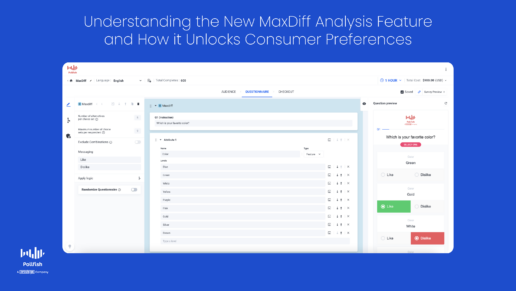
What is a MaxDiff Analysis? The New Best-Worst Scaling Feature
What is a MaxDiff Analysis? The New Best-Worst Scaling Feature
How to Promote Repeat Purchases with Survey Research
How to Promote Repeat Purchases with Survey Research

You’ll need to cultivate repeat purchases from your customers given the weight of customer retention. Even if you operate a B2C retail establishment, your business will greatly benefit from existing customers shopping from your business continuously.
90% of customers are more likely to purchase more, and 93% of customers are more likely to make repeat purchases at companies with excellent customer service.
61% of SMBs report that more than half of their revenue comes from repeat purchases of existing customers, rather than from new customers. These statistics demonstrate how clear the value of repeat purchases is.
However, despite these perceptible benefits, 96% of customers stop doing business with a company due to poor customer service. This damaging statistic proves that almost all customers will not simply make fewer purchases with a business, but abandon it entirely.
As such, brands must elevate their CX and understand their customers to retain customers.
This article explores the concept of repeat purchases, their implications, importance and how to foster it with survey research.
Understanding Repeat Purchases
A self-evident concept, repeat purchases refer to instances of customers purchasing more than once from the same business. This behavior is usually associated with buying from a business multiple times, instead of just twice.
As such, repeat purchases result from customer retention, which is the result of consumer loyalty. There are many building blocks of loyalty, including providing a great customer experience, reasonable prices, product satisfaction, brand equity, brand trust, satisfying all of your consumer preferences and more.
When strategizing how to stimulate repeat purchases, businesses can create various campaigns, from advertising to PR, social media and various others to facilitate repeat purchases through different purchasing methods. This means that although you may have customers who purchase in-store, you can still pique online or phone orders.
For example, assume you have a customer persona who prefers buying via the brick-and-mortar way. They can still be swayed to make an online purchase, should it be compelling enough. You can achieve this by offering a special online promotion, introducing an online rewards program, or appealing to this persona in some other way that makes it tempting for them to buy online.
At any rate, you can forge repeat purchases through omnichannel communications and various purchasing options.
The Importance of Repeat Purchases
Repeat purchases are important for several reasons.
First off, when customers buy from the same company, it is a sign of customer loyalty, which means that not only will your customers continue buying from you, but they will be less inclined to shop from your competitors.
As such, you’ll be drawing in a larger customer retention rate, and as you’ve read across multiple CX, marketing and eCommerce outlets, customer retention is more profitable than acquisition. Various figures prove this, such as the fact that acquiring new customers costs five times as much as keeping existing ones and that selling to existing customers has a success rate of 60-70%, while it is only 5-20% for new customers.
High levels of repeat purchases also point to a low customer churn rate, another necessity for keeping your business afloat, given the need to retain a stream of customers. In addition, once customers churn, it is going to be difficult to bring them back to your business, as they've already made up their minds — and not from hearsay but their experience from being your customers.
If your customers didn’t like your products, they wouldn’t buy them — unless it was due to utter necessity and no other choice. As such, when customers buy repeatedly from you, not only are you lowering your customer acquisition cost due to higher retention, but you’re also building trust around your brand. The more customers buy from you, the more reliable you are perceived to be.

Customers who make repeat purchases are also important given their higher expenditures, as repeat customers spend 67% more than new customers. This isn’t surprising, as retained customers know what to expect from their favorite brand(s), therefore being more liberal with their spending.
Customers who buy from you year after year are critical, as they signify a segment that has the potential or currently carries a high Customer Lifetime Value. This metric relays the worth of customers during their entire relationship with the company. It involves both purchases and the length of a relationship customers have with businesses.
Value also increases in reverse, meaning that a brand appears to be more valuable to customers who make continuous purchases. As such, these purchases exemplify high levels of customer value, which is the perception of what a product or service is worth to a customer versus its alternatives.
All in all, when customers make repeat purchases, they are easier to sell to, improve a brand’s reputation and generate higher overall value for a company.
7 Effective Ways to Increase Repeat Purchases
Businesses can try experimenting with different methods to increase and strengthen customers by making repeat purchases.
The following enumerates 7 methods you can use to increase repeat purchases:

- Offer perks via VIP programs.
- These programs grant elite status to customers who buy more, directly leading to repeat purchases.
- Create referral programs with incentives for current customers that bring in new ones.
- This will whet customers’ interest in staying customers, as they will be rewarded.
- Create discounts and seasonal campaigns to draw in continuous purchases for special occasions.
- This will entice customers to buy repeatedly by buying more than just one kind of product. For example, various Halloween candy or Christmas decor.
- Retarget customers via email marketing.
- Target your customers directly after they make their first purchase via email marketing.
- You can give them the option of subscribing to a mailing list or suggesting similar products now and then.
- Create exclusive deals for customers through rewards programs.
- While creating seasonal promotions is useful, you can extend your deals and discounts by creating rewards programs for customers.
- This directly leads to customers buying more.
- Appeal to customers with marketing personalization.
- No one likes to be marketed to, especially in generic ways.
- Creating personalization makes customers feel seen, heard and far more special than they would as recipients of non-personalized offers and messages.
- Ask for user-generated content.
- This involves content that your consumers produce via using your products and services, which you then feature across your website and other digital properties.
- This method creates bonds between brands and customers, which gives brands an edge in that customers view them as more than just another business.
How to Stimulate Repeat Purchases with Survey Research
Market research is the underlying mechanism for increasing repeat purchases. This is because, to appeal to your customers, you’ll need to understand them at a deeper level. This way, you can properly market to and serve them.

When you understand all of your customers’ desires, needs, aversions and perceptions, you’ll be able to create marketing campaigns that compel them to interact with your brand, as you push them further down the sales funnel until they convert.
There are various market research techniques that you can apply to better understand your customers; this involves gaining insights into customer behavior and your customer’s needs, along with their reactions to your current marketing campaigns.
Wheel secondary market research is a good starting point for learning about your customers, your best bet is to gain insights that are timely and unique to your target. You can achieve this by conducting survey research, a kind of primary research.
Surveys allow you to inquire into any topic, granting you full control over your market research study. You can create surveys for several purposes, as there are various surveys and different types of survey questions you can ask.
The following lists some of the key survey types to use to increase repeat customer spending:
- The customer service survey
- Bad service can deter customers from making any further purchases from you and this survey gauges your customer service.
- The customer retention survey
- Given that repeat purchases indicate retention, use this survey to help you determine your degree of customer retention.
- The CES survey (Customer Effort Score Survey)
- This survey measures customer effort, the degree or amount of effort that a customer puts into a certain interaction with a company.
- The longitudinal survey
- You can measure the opinions your customers have on your products and services by surveying them over longer periods with this kind of survey.
- The product satisfaction survey
- Especially useful for observing attitudes and opinions of your products, this survey allows you to get direct feedback on the products themselves.
- This helps you improve your product features and innovate new ones.
Fueling Your Business
You should always aim to encourage your target market to make repeat purchases. After all, these are the lifeblood of customer retention, yielding all of its benefits. To spur this shopping phenomenon, you’ll need to understand your customers at a deeper level.
You’ll need a strong market research platform to host your survey campaigns. Such a platform should run on random device engagement (RDE) sampling, so that you can reach customers in their natural digital environments, instead of pre-recruiting them. This removes social pressures in the surveys and will cut back on survey bias.
You should also use a mobile-first platform, as mobile dominates the digital space and no one wants to take surveys in a mobile environment that’s not built for them.
The online survey platform you opt for should also offer artificial intelligence and machine learning to remove low-quality data, offer a broad range of survey and question types and disqualify low-quality data.
It should also allow you to survey anyone. As such, you’ll need a platform with a reach to millions of consumers, along with one that offers the Distribution Link feature.
This feature will allow you to send your survey to specific customers, instead of only deploying them across a vast network.
With an online survey platform with all of these capabilities, you’ll be able to motivate your customers to make repeat purchases.
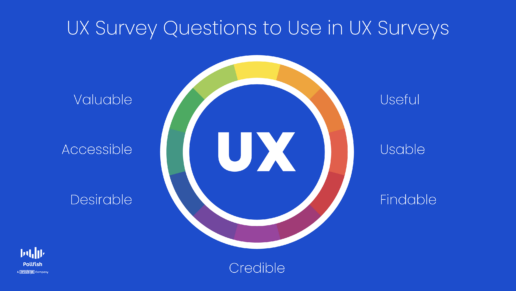
The Best UX Survey Questions to Power Your Surveys
The Best UX Survey Questions to Power Your Surveys

You need to have a reliable set of UX survey questions to power your UX survey. The questions steer the direction of your entire study and campaign and should therefore be woven carefully.
This kind of survey assesses user behavior in relation to your products, services, digital experiences and other user experiences. It is meant to reveal how your consumers experience your offerings firsthand, revealing the difficulty and ease of using your products.
Achieving a good UX is critical for numerous reasons, such as the fact that top companies that lead in UX outperformed the S&P index by 35%. Good UX also has a strong ROI, as every $1 invested in UX, brings $100 in return, indicating an ROI of 9,900%.
You ought to avoid bad UX like the plague, as it even turns away the customers who love a brand. In fact, 32% of customers who love a brand will leave it after just one bad experience.
This article presents various examples of UX questions, their importance in different settings and where in the customer buying journey to use them, so that you are never at a loss of how to fill your UX survey.
The Importance of UX Survey Questions Throughout Different Touchpoints
There are various touchpoints that you should use as the basis of your UX survey questions, as the experiences your users undergo there are critical to study.
By asking questions based on different moments in the buying journey, which include pre and post-sales, you’ll paint an accurate picture of how your consumers perceive all of your UX offerings, whether they are digital or physical.

This includes understanding the difficulty and ease of interacting with your company and using your products, services and experiences. As such, you can use the insights from your UX survey questions to improve across all customer touchpoints, accelerate product innovation and ease the process of your experiences.
Additionally, by studying UX across various touchpoints, you’ll unearth your consumer preferences, see what’s driving demand in your offerings specifically, understand what’s inciting repeat purchases and much more. The key is to ask relevant and specific questions.
Where to Use and Draw Inspiration for UX Survey Questions
While it is important to look at your customer experience as a whole, there are several key moments that you should zero in on to study your UX.
These provide excellent opportunities for asking UX questions, whether they involve questioning users then and there, or following up with a UX survey that asks questions on different points in their UX.
The following lists key moments in the buying journey to pay attention to and use for UX survey questions:
- The first visit(s) to your website, mobile site, app or other digital property
- When: Pre-sales
- After an asset download
- When: Pre-sales
- This is especially useful for B2B consumers.
- Interactions with a UI element or experience
- When: Pre or post-sales
- This can involve quizzes, games, UI marketing collateral and more.
- Subscription sign-ups
- When: Pre (if free) or post-sales (if paid for)
- This can be a free or paid subscription to content.
- Trying a product via an in-home use test
- When: Pre-sales
- This involves the users trying out your products, who are usually recruited for market research purposes.
- For customer development
- When: Pre-sales
- This is a framework used to discover whether a product satisfies the need(s) of a target market, part of the lean startup concept in order to bring a product to market more efficiently.
- After a week or more of purchasing a product or digital asset.
- When: Post-sales
- This is especially necessary if you collected the customers’ email addresses.
- During present usage of service, product or app
- When: Post-sales
- Example: UX with an app, a subscription, a product, a feature, etc.
Examples of UX Survey Survey Questions to Use
Now that you understand the importance of using UX survey questions across different stages in the customer buying journey, along with the specific times to use them, let’s analyze the heart of the survey: the questions.
Aside from being able to come up with reliable UX questions, it is key to be able to organize and label them. This will help you think up and sort new questions as they arise.
The following provides examples of useful UX survey questions to use in your UX survey:
- Have you used the [new tool/feature]?
- Question type: Yes or no
- When to use: After (or during) the first visits to your website, mobile site, app or other digital property
- Follow up? If yes, go to Question 2
- How easy was it to use [new tool/feature] on a scale of 1 (very difficult) to 5 (very easy)?
- Question type: Likert scale
- When to use: As a follow-up to the previous question, during present usage of product, service or app
- Follow up? If the answer is between 3-5, follow-up with an open-ended question
- Was this [asset name] helpful?
- Question type: Yes or no
- When to use: After downloading an asset
- Follow up? Yes, with an open-ended question about how it was helpful.
- What are your first impressions of [UI element]?
- Question type: Multiple-choice, multiple selection and open-ended questions
- When to use: After interacting with a UI element
- Follow up? Yes, with an open-ended question to explain the reasoning
- Did you enjoy [UI element]?
- Question type: Yes or no, or multiple selection ranging from “not at all” to “very much.”
- When to use: After interacting with a UI element
- Follow up? Yes, with an open-ended question to explain this answer.
- How easy was it for you to sign up for this subscription?

- Question type: Likert scale
- When to use: After signing up for a content, SaaS or physical subscription
- Follow up? Yes, with an open-ended question on how to make it easier/better.
- Did this product have any glitches or things you would change?
- Question type: Multiple-choice of “none at all”, “1-3 things, but they aren’t major,” “1-3 things and they’re important,” etc
- When to use: As part of an in-home use test
- Follow up? Yes, with an open-ended question on what the problems the customer incurred or features they would like to see improved.
- What is one thing you would change about [tool/feature]?
- Question type: Multiple-choice, multiple-selection
- When to use: As part of customer development/ product innovation
- Follow up? Yes, with an open-ended question to explain further.
- What are the best / worst parts about using this [product, service, digital experience]?
- Question type: Multiple-choice, multiple-selection
- When to use: After a customer has used a product for a certain amount of time
- Follow up? Yes, with an open-ended question to explain what they like and dislike about their UX.
- Did this [UX/UI element] help you? Was it easy to use?
- Question type: Yes or no or Multiple-choice of “not at all” to “yes, completely.”
- When to use: Interactions with a UI element
- Follow up? Yes, with a multiple-choice question on the easiest and most helpful aspects or those that aren’t.
Excelling in UX
Improving your UX and keeping customers satisfied in this regard goes a long way towards providing customer satisfaction and building consumer loyalty. You should therefore strive to optimize your UX whenever possible.
To do so, you’ll need a strong online survey platform, one that offers advanced skip logic to route respondents to relevant follow-up questions based on their previous answers. It should also make it easy to form a customer journey survey to survey your respondents across their customer journeys.
The best-in-class platform uses random device engagement (RDE) sampling, for reaching customers in their natural digital environments, instead of pre-recruiting them. This removes social pressures in the surveys and will cut back on survey bias.
You should also use a mobile-first platform since mobile dominates the digital space and no one wants to take surveys in a mobile environment that’s not built for mobile devices.
Your online survey platform should also offer artificial intelligence and machine learning to remove low-quality data, disqualify low-quality data and offer a broad range of survey and question types.
Additionally, it should also allow you to survey anyone. As such, you’ll need a platform with a reach to millions of consumers, along with one that offers the Distribution Link feature. This feature will allow you to send your survey to specific customers, instead of only deploying them across a vast network.
With an online survey platform with all of these capabilities, you’ll be able to collect data on cultural awareness and virtually any topic.
All About Panel Surveys: 5 Panel Survey Examples and More
All About Panel Surveys: 5 Panel Survey Examples and More

A survey panel also referred to as a panel survey, is a common research method used to gain insights from the same group of participants over a certain period.
This technique relies on examining research participants who join a market research study voluntarily. Aside from this, the participants are pre-recruited by researchers, to ensure they fit the respondent criteria they set for a particular research project.
This kind of research technique may appear to be a buzzword, given its prevalence in the market research space. However, whether it is useful and effective for your market research is entirely up to your research preferences and campaign needs.
Nonetheless, it is crucial to understand what a panel survey is before you can decide on whether you ought to implement it into your research strategy or not. Or, perhaps you want to use it in conjunction with another research method.
Either way, you should have a holistic view of everything this research method entails. This includes comparing it with random organic sampling and online surveys. Luckily, this guide provides all of this information and more.
This guide explores panel surveys, explaining them in full depth, along with their pros and cons, 5 examples of them and a comparative analysis of random sampling and survey panels.
Note: If you’re looking to do market research without the drawbacks of conducting panel surveys, try Pollfish. Our unique methodology guarantees authentic high-quality data, and it’s a fast and reliable way to survey targeted (yet randomized) people while they’re already engaged on their devices.
All About Panel Surveys: Table of Contents
- Defining Panel Surveys
- Panel Surveys: A Kind of Longitudinal Study
- Using Panelists in Your Target Market
- What to Study with a Panel Survey
- The Importance of Panel Surveys
- Panel Survey Examples: What Do Researchers Use Panels For?
- Pros & Cons: The Advantages and Drawbacks of Panel Surveys
- Organic Sampling: A Better Alternative to Panel Surveys
Defining Panel Surveys
Also called survey panels, panel surveys are a distinct form of market research that relies solely on panels to carry out the research study, as its name suggests.
Thus, it’s key to understand what the term “panel” means in the context of market research. A panel is a selection of participants who help researchers conduct market research by providing them with feedback on various studies.
The panelists do not join the study randomly, rather they are pre-recruited and pre-screened, based on the researcher’s panel needs and criteria.
A kind of research panel, a survey panel operates in the same way, except that it is strictly used within survey campaigns. As such, this panel is used for survey research alone, as opposed to other methods of panel usage.
Panels can be used in various research settings, including the following:
- One-on-one interviews
- Focus groups
- Survey studies
- All 6 main types of research, which include
- Exploratory research
- Correlational research
- Causal research
- Descriptive research
- Experimental research
- Explanatory research
- Field research
In the context of this guide, we’re going to focus on panels used in survey research alone. Hence, they are called survey panels, or panel surveys.
One of many market research techniques, this kind of research process uses a consistent group of participants, with the researchers returning to them repeatedly, either for a single survey campaign, which can require using multiple surveys or for multiple campaigns.
Panel Surveys: A Kind of Longitudinal Study
It is important to know that when referred to as a panel survey, this kind of research method is known as a longitudinal study. As such, this process is paired with longitudinal surveys.
This type of research study is often associated with correlational research.
As a type of longitudinal study, panel surveys involve correlational research because they examine the relationship between variables over an extended period. The period itself can vary.
As such, this kind of research method can be conducted in the following ways, occurring throughout:
- Weeks
- Months
- Years
- Decades
Regardless of the time dedicated to performing this research, it always involves the same survey target audience. By surveying the panelists at different points in time, researchers can glean a wide variety of changes and consistencies within their research subjects, aka the panelists.
Using Panelists in Your Target Market
While the panel remains the same, the topic(s) that can be scrutinized are virtually limitless.
For market research, the topics deal with a business’s target market. As such, all members of the panel survey must also have the qualities of those in your target market.
You can perform panel survey studies by zeroing in on your target market’s various market segments and customer personas. These are more distinct and defined groups of people who fall under your customer base.

This is the ideal way to conduct this kind of research and many others, as your target market can include a wide range of subgroups, whether they differ based on the following categories:
- Geographical locations
- Demographics
- This involves groupings based on gender, age, income level, ethnicity, employment type, education, etc.
- Psychographics
- This involves their attitudes, lifestyles, aspirations, values and other psychological criteria.
- It also involves whether they engage in a particular customer behavior.
- Firmographic
- This label is particular to studying a panel of business personnel, which you may do in B2B research.
- As such, it requires running B2B surveys.
Whichever categories you intend to group your panelists into, remember that they must fit into the qualities of your target market, as this group is the population of people most likely to purchase from your business.
What to Study with a Panel Survey
As aforementioned, you can explore a wide variety of topics in your panel survey. The following list enumerates some of these topics. Note that this is not a comprehensive list, as various other topics of concern may crop up, depending on your business, your customers and your research needs.
Here’s what this kind of research method allows you to study:
- Changing attitudes, opinions and sentiments
- Changes in customer buying behavior
- Changes in customer lifestyles
- Changes to consumer preferences
- Developments in your target market needs
- How your target market views your competitors
- The willingness of your customers to make repeat purchases
- Gaining a more in-depth glance at your market segments and customer personas
- Performing time-based research, such as longitudinal studies, retrospective studies and prospective studies
- Acquiring a snapshot of the present through cross-sectional studies
In this post, we’ll look at five-panel survey examples, which delve deeper into some of the topics on this list. But first, we’ll explain why this research method is important for researchers and their market research campaigns.
The Importance of Panel Surveys
Panel surveys are important for a variety of reasons. Some of these reasons may hold more weight than others, depending on your research needs and preferences.
Firstly, these panels are ideal for longitudinal research, as the same group of participants agreed to partake in your study. You would make it known that they would be used in continuous studies.
Aside from facilitating longitudinal studies, panel surveys are also ideal for another time-based research campaign: retrospective studies. As such, these panels aid researchers in completing their retrospective surveys.
This kind of study is used to examine changes over a long period, except the survey itself is only administered once. That’s because retrospective studies invoke occurrences from the participants’ past, whether they are experiences, inclinations, feelings, or attitudes.
The study may ask participants to compare past phenomena with how they feel in the present. The purpose is to study historical data and compare it with the present.
Panel surveys are also necessary for prospective studies, which also can last for years and study changes and developments. However, unlike retrospective studies, they involve participants who do not have a certain outcome. Instead, prospective studies seek to study people before they develop a certain outcome, such as a disease or a new shopping habit.

Aside from enabling researchers to study changes, these panels also make it possible to conduct cross-sectional studies, which are different from the prior three kinds of research studies — longitudinal, retrospective and prospective studies. Nonetheless, cross-sectional studies are still one of the key survey research methods.
As opposed to studying survey subjects at multiple points in time, a cross-sectional study entails gathering research about a particular population at one fixed point in time. Because of this, this type of research method is often referred to as a snapshot of a studied population.
This kind of study is conducted by using cross-sectional surveys, which are designed specifically for the cross-sectional model and can be sent to your panelists. Although cross-sectional studies don’t require a panel survey, given that they focus on a single point in time instead of several to examine changes, they can still be administered via these panels.
That’s because you can recruit panels for virtually any study, whether it includes partaking in a survey, an in-person interview, field research, or a focus group. Thus, panel surveys are not limited to any form of study, making them multifunctional.
This grants plenty of convenience to researchers, especially those bogged down by various other tasks they have to uphold, instead of putting together a group of respondents.
Panel surveys are especially important, as they provide an ongoing sampling pool of participants, which researchers can turn to whenever they seek to conduct more research. This can be to jump-start a new research campaign or conduct further research for an ongoing campaign.
This constant access to a sampling pool can also assist researchers who initially thought they had enough data, only to later discover they need more information. After all, if the panelists have already opted in, there is no need to seek out participants any further.
Panel surveys are also useful due to the quality of the panelists. Although identifying and vetting panel members may take some time, the result is a quality survey panel, one that ticks off all the panelist criteria you have. With this, you can mitigate fraud and rest assured you’re studying the correct populations.
All in all, panel surveys are useful for a variety of market research campaigns and come with a good share of benefits, despite some of their shortcomings.
Panel Survey Examples: What Do Researchers Use Panels For?
Now, let’s get to the heart of these panels, by going over what they can consist of, when, where, and how to use them.
The best way to explain the uses of a panel survey is by providing several panel survey examples. In this section, we’ll review five examples of when panel surveys can be used to good effect.
This will allow you to understand how panels work, along with some of their best-case scenarios for usage.

Example #1: Tracking Changes Over Time
Given that studying changes over time is the main purpose of leveraging a survey panel, it’s key to review this use case.
As such, one of the strongest examples of a panel survey is when researchers ask the same question(s) to a group of the same participants over a long period.
For example, if you were conducting a sociological experiment to understand if (or how) age correlates with wealth, you can set up a survey that studies panelists on the following:
- Income
- Expenses
- Assets
- Changes in employment
- Willingness to change jobs
- Willingness to switch job fields
A survey covering this topic ought to be conducted every two years, possibly spanning a decade (or more if need be).
That way, you can track changes relative to the scope of the issue you’re researching. Given that people typically stay at a job for about two years, it is key to follow up every two years on this research subject.
However, this has changed due to the Great Resignation, which saw the largest exodus of employees quitting their jobs in recent history.
The Great Resignation is not slowing down any time soon, with large numbers of people seeking better pay and benefits, along with the rise in job openings and remote work. This makes it much easier to switch jobs.
As such, the length of time you devote to tracking changes will depend on the circumstances of your study.
Alternatively, if you run a business, you’ll need to acquire ongoing insights into the market – and into audience behavior. For example, if your gym wear company wants to track the fitness habits of people over the year, a panel can be questioned every three months. You can run surveys with the same questions about how long people exercise, where they exercise, and how they do so.
For any business endeavor, you can implement the brand tracking survey, which allows you to track any changes that deal with your brand. This involves studying how your business is perceived, how in-demand its offerings are, what concerns your target market has that your business can address and much more.
Example #2: User Experience Research
Another common example of using a panel survey is for UX and UI design research. While UI refers specifically to designing web experiences, UX is far broader.
User experience can refer to a wide range of experiences that your customers encounter when interacting with a product, digital experience, or service. As such, it covers a wide range of aspects, all of which have some impact on how users experience your business’s offerings.

You can use these aspects as key considerations for driving your UX research. The following lists the four key components of user experience, which you should use in your research:
- Value: Does this experience give customers value?
- You can ask your panel whether a certain product, service, or digital experience provides them use and how so.
- It is key to study how your offerings can be made more valuable.
- Also, you should inquire about the products/services that your customers don’t find useful.
- Function: Does a product or product feature work?
- Ask your panel whether there are any bugs or glitches in how a product, feature, or service works.
- You can also study whether new needs arise in terms of your product’s functionalities.
- Usability: Is it easy to use?
- While your offerings may provide value, ask your customers whether they are easy to use, regularly.
- Study if your offerings can be made simpler over time.
- Also, look into whether customers seek other ways to access your offerings.
- For example: different devices, operating systems, web and app access
- General impression: Is it pleasant to use?
- Track changes to the overall sentiment towards your products, services and business at large.
- Ask your customers whether your offerings delight them or upset them.
- Ask customers to reveal anything else they’d like to see from your business to improve their UX.
When a company is building an app or a digital product, they want to gauge the customer experience as they go.
While usability testing (i.e. tracking how a person interacts with a specific feature), is often done using different methods, you can conduct qualitative research about design and experience by way of panel surveys.
The benefit of a panel survey here is that the participants remain constant – which removes a key variable.
Additionally, you can select panel participants based on their background or expertise, which will allow your pool to answer questions in a way that adds value to your product development process.
Example #3: Customer Satisfaction Surveys
Customer satisfaction is central to keeping your business alive, whether you want to release new products or build a steady base of loyal customers. As such, you can use panels to keep a watchful eye on your customers' satisfaction with your business.
Doing so will allow you to increase your customer lifetime value, a metric that measures the total monetary value a customer will bring to a business during their relationship with the business throughout their lifetime.
If you want to gauge customer satisfaction and positive/negative sentiment over the lifetime of their interactions with your offering, use a select group of long-term customers and ask them questions periodically about your value proposition.

Use a customer satisfaction survey for this campaign, which can be framed to reveal hidden sentiments, or can be explicitly focused on asking how satisfied they are with what you offer.
For example, use the following questions/considerations to measure customer satisfaction:
- On a scale of 1-10, how satisfied are you with [a product, service, experience]?
- A rating scale question
- What would you change about [a product, service, experience, or your company] if you could?
- Open-ended question
- How easy was it for you to [do something] with our product?
- Options include a scale of extremely easy to extremely difficult
- This is a Likert scale question,
- How would you rate your experience with our new [a product, service, experience]]?
- This can be a Likert scale.
- Or, it can involve multiple choices of varying answers.
In this panel survey example, the business would be able to track patterns of customer happiness over time – for example, to see whether features continue to add value months or years after the customer signs up. And you can incentivize participation with gifts, reduced subscription fees, or extra services.
Consider discussing the following topics with your panel:
- What are their overall thoughts about your business?
- How do they receive product updates? (Poorly, well, etc.)
- What kind of value does your business provide and where does it lack in value?
- What else can you do to delight your customers?
Example #4: Employee Engagement
Another crucial panel survey example deals with studying your human capital, aka, your employees. After all, it is the employees that allow your business to function daily.

As such, your business needs to track employee engagement and team morale. In essence, here, your staff are the members of the panel survey – and you might survey them every week, month, quarter, or year. In this case, you’re surveying the same people about issues that answer the following:
- Are employees engaged at work, or do they have low morale?
- Do employees enjoy their work?
- Are they meeting their goals?
- Do they understand the company's mission?
- Do they understand the company roadmap and high-level goals for the coming weeks and quarters?
- Are they happy with their compensation?
- Where can the company improve?
If this is the type of panel survey you’re looking for, there are plenty of surveys that are specialized for human resources and employee engagement purposes.
This includes the following surveys:
- The employee satisfaction survey
- Used specifically to measure satisfaction, this survey focuses on what customers like and dislike about their jobs and the company,
- The employee feedback survey
- This is a general survey that should handle high-level topics.
- The employee burnout survey
- This survey focuses on the negative aspects of employees’ jobs and your company.
- You can use it to avoid burnout by asking them what they’d like to see change in their employment, workflows, job processes, schedules, etc.
- The employee recognition survey
- This is conducted to measure and understand the degree of employee recognition within a business.
- It gauges the perception of recognition that employees feel they have from their managers, peers and the company at large.
- The eNPS survey
- This functions the same way as a Net Promoter Score survey but for employees.
- Employees are asked how likely they are to recommend their company to others, on a scale of 1-10.
- The employee retention survey
- This is used as an instrument to retain employees.
- It delves into the topics that business owners and HR workers need to understand, to forge ideal work environments and cater to the needs of their employees,
Example #5: Customer Loyalty
It takes years to build solid consumer loyalty, which is a must, given that it is the core of the aforementioned customer lifetime value. By retaining your customers, you’ll spend less on attempting to acquire new ones, have a steady pool of revenue and maintain a good brand reputation.
Your panel survey can help you keep track of your customer loyalty. As you gain their insights, you’ll discover how you can raise their loyalty to your brand. To do so, use a market research platform that offers a brand tracker.
This tool allows you to keep track of a variety of brand issues throughout the year and beyond. It enables you to uncover whether there are any shafts in your brand perception or reactions to your marketing campaigns.
Consider tracking the following on customer loyalty:
- What excites my target market about your offerings?
- What kind of brand news incites the most interest?
- Which segments of customers are most likely to make repeat purchases?
- Which customer groups are the most loyal to your brand?
- Which actions and offerings inspire loyalty to your brand?
Pros & Cons: The Advantages and Drawbacks of Panel Surveys
Now, it’s time to analyze the advantages and disadvantages of using panel surveys for your market research.
One of the primary advantages of a panel survey is that the participants learn to trust the researchers, and therefore may be open to deeper and more truthful answers.
In addition, this ongoing relationship can allow researchers to dig deeper with follow-up questions.

Another advantage is that with screening having occurred at the start of the research, all following surveys are quicker to carry out than starting from scratch.
However, the disadvantages of panel surveys include:
- Panel conditioning: When you’re surveying the same people repeatedly, previous surveys might influence their responses and/or behavior. For example, if they know a certain question triggers a longer process, they may choose an answer that offers the path of least resistance. Or if you’re asking about a particular activity, like eating donuts, they may eat less (or more) thereafter.
Note: Furthermore, panel surveys don’t tend to occur within a “natural” setting, and therefore the artificial environment might affect thought processes and responses to questions. - Panel fatigue: If a person feels like a pay-off for participating in a panel survey is no longer worth the effort, the quality of their response may drop. This leads to incomplete or poor-quality survey responses, and survey “straight-lining” – i.e. answering the same to every question.
- Declining participation: Over time, inevitably, participants will drop out of the process – either due to panel fatigue, or other reasons. This will damage the quality and depth of your data.
And with survey panels, you run the risk of accidentally signing up “professional” panelists – especially when there are cash-based incentives on offer. Though screening should be designed to pick up these people before they enter the process, they’re adept at slipping through the net.
Organic Sampling: A Better Alternative to Panel Surveys
With increased pressure on people’s time, survey response rates have been decreasing. It’s harder than ever to guarantee consistent high-quality data, and as conventional survey companies scramble to include as many willing participants as possible, the quality reduces yet further.
At Pollfish, we don’t use conventional panels. Our unique methodology, called Random Device Engagement (RDE) uses the organic sampling approach for finding and procuring survey participants.

A kind of organic probability sampling, RDE polling relies on advertising networks and other device portals to engage potential respondents wherever they are voluntarily. This includes a variety of digital platforms and properties, such as:
- Mobile sites
- Apps
- Website
- Mobile games
All respondents gathered via the RDE method have no biases, as they are not pre-recruited and therefore face less pressure to answer things in a certain way. Due to this, they are less subject to a wide host of survey biases.
This includes the following survey biases:
- Sampling bias: This bias occurs when the respondent selection process, specifically when a survey sample is not chosen at random.
- This leads to under or overrepresentation of a certain segment of your survey target population, as only certain types of respondents are going to partake, while others aren’t.
- Acquiesce bias: Also called agreement bias, this occurs when respondents gravitate towards positive or agreeable answers.
- In this bias, respondents feel more social pressure to answer in a particular way, as their identities are known in panel surveys.
Organic sampling and Random Device Engagement obliterate these two (and other) biases. That’s because this process is completely randomized, stamping out sampling bias. Not only does it reach people randomly, but on Pollfish, this method is paired with our state-of-the-art survey platform.
Our online survey platform reaches specific populations based on demographics, psychographics and specific screening questions you can input. This ensures you’ll reach all the required target audiences to partake in your study.

Aside from reaching respondents organically and randomly, the respondents are completely anonymous. They don’t need to provide their names, contact information, or any identification to take a survey. Instead, they are simply reached and opted in.
They may also have the option of gaining survey incentives. This eliminates virtually all forms of acquiescence bias, as there is no pressure to provide certain answers over others.
Each screened participant has a unique ID, which prevents them from taking the same survey more than once, weeding out bias and survey fraud.
When working with Pollfish, you don’t need to use conventional panels – which are slow and subject to conditioning, fatigue, and declining participation. Instead, get authentic insights from our pool of over 250 million people (and growing) – who are already engaged on their devices and ready to participate.
As such, organic sampling, coupled with a potent online survey platform like Pollfish, provides a better market research option over panel surveys.
[wp-faq-schema]
Producing Customer Convenience with Market Research
Producing Customer Convenience with Market Research

Despite the generality of its name, you should never ignore customer convenience, as you’re not competing on product and price alone. Customers seek convenience wherever they can find it and they strongly value it in the age of ecommerce.
In fact, 83% of customers rate convenience while shopping as more important to them now compared with five years ago. It is clear to see why customers will choose one brand over another, given the weight of the convenience factor.
On the contrary, an inconvenient customer experience will drive customers away from your business — this isn’t an exaggeration. 97% of customers have abandoned a purchase because the service wasn’t convenient enough.
Convenience is the mainspring of the growth of ecommerce; businesses should therefore work towards developing in all parts of their business.
This article explains customer convenience, its importance, common places to include it and how you can produce it with market research.
Understanding Customer Convenience
Customer convenience may outwardly appear to be a broad term. However, despite that it comes in many forms, customer convenience is bound by the concept of easing all customer-facing activities so that it is painless for customers to do business with a company.
Customer convenience does not merely entail making it slightly easier to buy products from a business. Instead, it involves creating ultimate ease across the entire customer buying journey.
Customer convenience involves making any element in the customer experience, including the digital experience, saving customers time and effort. Although many products, services and other offerings were designed and marketed for their convenience, not all areas of business offer it.
What Determines Customer Convenience
This concept is determined by the ratio of pleasure and pain in the user experience, which in turn, affects customer behavior. The more glaring and latent obstacles customers undergo while engaging with your business, the less convenience your business offers. On the other hand, the more friction-free and seamless your processes are, the greater your customer convenience becomes.
Consider all the interactions and undertakings involved with your business that customers face. Are they all designed with ease of use, speed and general convenience? Chances are, with all the campaigns you’re running, that not every customer-facing facet of your business is optimized to save your customers time and effort.
Given that customers prioritize convenience, your brand should too.
The Importance of Customer Convenience
Customer convenience is important for several reasons.
As the intro mentioned, close to 100% of shoppers value customer convenience. This is even more pronounced by the fact that more than one-third of shoppers feel they have less free time now compared with five years ago. These shoppers seek out businesses that help them save their time and effort.
52% of those shoppers say that half or more of their purchases are influenced by convenience. As such, these statistics prove the importance of customer convenience, as it influences purchases and customer buying behavior. Customers are more inclined to buy from businesses that offer convenience, whether it is retailers offering various sizing options, or several delivery options.
As such, customer convenience affects how customers make buying decisions, including what products to buy, what services to get and with which businesses to engage with. Businesses should thus cater to any convenience-related whims and expectations that customers may have.

To achieve this end, they should remove any pain points or causes of discomfort across their customer experience. This involves digitally, physically and across various other customer touchpoints, such as on the one.
When it is easy for customers to get the information they need and to complete a purchase with you, not only will they be more inclined to buy from you, they’ll also be happier, owing to the convenience you provided. As such, convenience is a vital factor in customer satisfaction.
Satisfaction is a key factor in patronage and when customers are constantly satisfied, then you’ll earn their loyalty, which in turn yields customer retention and finally, customers with a high Customer Lifetime Value (CLV). Building up to the status of a high CLV requires the starting point of delivering customer convenience.
As such, creating customer convenience is a necessary long-term strategy for growing your business.
Common Ways to Create Customer Convenience
To reiterate, customer convenience exists in many forms. You should forge customer convenience whenever possible, not just during a transaction or a point of sale. This is because it exists in five dimensions of service: time, place, acquisition, use, and execution.
Aside from service, there are also several other key instances in the customer experience that require establishing customer convenience. These involve various marketing and UX concepts.
The following lists the various common ways you can use to create customer convenience, along with examples on how to create convenience in each category:
- Usability
- This involves the core of convenience, referring to the ease of using something.
- This can involve using the product, a service, or a digital experience,
- Digital experiences involve digital products, content and mechanisms for ordering, purchasing or subscribing to something.
- Example: Create convenience in the checkout with a one-click purchase capability
- Location
- Create products and services close to the customer or that the customer can access quickly.
- For example: advertising to a target market segment that lives near the location of your shop or where your products/services are sold.
- Create products and services close to the customer or that the customer can access quickly.
- Saving Time
- Saving time is one of the major components of customer convenience. No one likes having too much of their time taken up, not least by interacting with a business.
- Assure your website, mobile site and apps quickly load.
- Create a quick checkout and agility in all of your digital experiences.
- Personalization
- Personalize everything to show customers you understand them and don’t merely offer generic communication.
- Use marketing personalization in all of your marketing, outreach and communications practices.
- Make sure to customize your marketing content, as well as your products to your target market’s liking.
- Example: an online service or machine with menus that customers can use to personalize their experience.
- Scheduling
- This involves arranging appointments, meetings, repairs, calls with customer support and even conducting market research at times most convenient for your customers, or, in the case of market research techniques, your respondents.
- Offer various scheduling options, include custom scheduling, so that your customers choose the exact time and date of their appointments, etc.
- Delivery
- Always offer delivery services to your target market
- Ensure you offer delivery to all neighborhoods of a city, not just the main ones.
- There are various restaurants and food service businesses, for example, that only deliver to Manhattan, but not other boroughs.
- Offer various delivery options.
- This involves expedited delivery and contactless delivery options.
- Portability
- This refers to mobility and the ease of carrying items around.
- To remain competitive, create items that weigh less, are more compact and are easy to carry.
- For example, air conditioners are known for being unwieldy; you can keep your business competitive by making them portable.
- Automation
- This involves computers and software performing work that a human would otherwise do.
- When it comes to market research, this includes using a provider that runs on artificial intelligence.
- Certain products for everyday use can also be automated, for example, a dishwasher, soap dispenser, etc.
How to Create Customer Convenience with Market Research
Market research opens doors to your customers, from being able to segment your customers with market segmentation, filtering them further by creating customer personas and studying them for various campaigns.
Since customer convenience is centered on the customers, gleaning insights from the customers themselves is the most ideal way to produce it. Market research brings you these insights and the fastest and most convenient way to reach these insights is through conducting a survey campaign.
When you apply custom research, as opposed to syndicated research, you are entirely in control of your market research campaign. You’ll be able to create surveys by extracting the exact target audience you need, build your own questionnaires and qualify respondents on categories that go far beyond age and gender.

When creating your questions, you’ll be able to quiz your customers on a host of convenience-related matters. The surveys you create will uncover a host of customer intelligence, including consumer preferences on various aspects of your business.
This grants you firsthand insights into how your target market defines customer convenience for itself. By understanding your customers’ preferences, wants, needs and opinions, you’ll be able to inject convenience across all areas of your business, from the workings of your products, to customization, to UX and much more.
Here are a few key ways to create customer convenience through market research:
- Use a reliable online survey platform to complete the following steps.
- Begin by segmenting your customers via market segmentation using an online survey platform.
- You can create as many segments and subsegments as necessary for your campaigns.
- Create customer personas for granular representations of your actual customers.
- Survey your customers on customer satisfaction to discover gaps in your service, communications and overall CX.
- They will provide opportunities to improve your offerings and forge convenience.
- Create surveys with themes from the prior section on the common ways to produce customer convenience.
- To learn how difficult it is for your customers to interact with your company with the Customer Effort Score or CES survey.
- This shows the degree of difficulty a customer has experienced to try to get an issue resolved. It also refers to the ease (or difficulty) a customer had with a certain touchpoint with a company.
- Create campaigns to improve the gaps and points of friction you discovered from doing survey research in Step 3.
- You may want to conduct causal research and experimental research to determine if your changes correspond with customer happiness and truly hammer out convenience.
- Probe further by creating effective surveys on the campaigns you’ve created in Step 4.
- Here, you should assess the effects of the changes you’ve made and whether they’ve been able to foster customer convenience.
- Iterate what customers find convenient and remove all areas of difficulty that you discover from your survey studies.
- You can create follow-up surveys to continue optimizing your customer convenience.
Keeping Your Customers Comfortable at all Times
The way to stay ahead of the competition is to keep customers returning to you as opposed to patronizing your competitors. In order to stimulate customer loyalty and this kind of retention, you’ll need to produce customer convenience whenever possible.
Market research provides an avenue for creating customer convenience, as it involves studying your customers to understand them at a deep level. Given that convenience can exist in many forms, market research allows you to understand which are preferred by your customers, as well as what they find inconvenient in their customer experience.
In this way, customer convenience serves as the antidote to customer attrition, allowing you to keep more customers happy and most importantly, retain more customers. To do so, you’ll need to use a strong market research platform.
Such a platform should run on random device engagement (RDE) sampling, allowing you to reach customers in their natural digital environments, instead of pre-recruiting them. This removes social pressures and will cut back on biases.
You should also use a mobile-first platform, as mobile dominates the digital space and no one wants to take part in a difficult mobile session.
The platform you opt for should also offer artificial intelligence and machine learning to remove low-quality data, offer a broad range of survey and question types and disqualify low-quality data.
It should also allow you to survey anyone. As such, you’ll need a platform with a reach to millions of consumers, along with one that offers the Distribution Link feature.
This feature will allow you to send your survey to specific customers, instead of just deploying them across a network.
With an online survey platform with all of these capabilities, you’ll be able to extract quality customer data and forge customer convenience at every turn.

Diving Into the UX Survey to Improve User Research and UX
Diving Into the UX Survey to Improve User Research and UX

You’ll need to use a UX survey when conducting user research and all things relating to the use and functionality of your offerings. Whether you’re working towards improving the user experience (UX) of a product or a page on your website, the need to offer a superb UX is critical.
88% of users won’t return to a website after a bad user experience. Needless to say, you’ll be losing most of your website traffic and all of its implications, such as a loss of brand engagement and conversions, when your UX is less than stellar, much less when it is below par.
On the contrary, providing a good UX has substantial benefits. For every $1 you invest in UX leads to a return of $100. That is equivalent to an ROI of 9,900%.
Due to the weight UX carries and developments across various user-facing interfaces, you must always strive to improve your UX.
This article explains how to do just that, as it covers the UX survey, its importance, when to use it, how to create one and more.
Understanding the UX Survey
A UX survey is a survey designed to collect customer feedback to assess user behavior as it relates to your products, services, digital experiences and other user experiences.
The purpose of this survey is to grant you insight into how your consumers are experiencing using your offerings. This is critical given that it gives you direct access to the effectiveness, ease, difficulty and other associations your users have with your various properties.
A user experience survey can extract both quantitative and qualitative market research about a user’s interactions with a website, a digital product and all others. The data from this survey can be used to support and complement other Martech and SaaS integrations, such as website analytics and UX metrics.
As such, you can use it alongside methods such as A/B testing, heatmaps, usability testing, and more.
The feedback you receive from this kind of survey shows you exactly what customers are experiencing, what works in your UX, what needs improvement and what should be completely scrapped. This way, you’ll know directly from your users what changes you should prioritize.
There are various instances in the customer buying journey where you should study user behavior. This survey is the ideal method to use as part of your study, as it gives you timely insights into your UX.
The Importance of the UX Survey
The UX survey is important for several reasons for designers, end-users and ultimately, your business. This kind of survey is the ideal tool for using data for decision-making for various UX-related campaigns.
It gives firsthand insight into the usability of your various offerings from your consumers themselves. While it is important to give your experiences a test by your team and its designated participants, it is the experiences and opinions of your users that ultimately matter.

The UX survey is a crucial tool for the methodical study of target users, also known as user research. It provides access to your users’ needs and pain points. This way, your team becomes aware of how to improve various offerings, including what to keep as it is.
As such, this survey aids product designers, web developers, UX designers and other creatives with insights on how to establish the most sought-after designs, the kind that improves the user experience on many fronts.
User researchers can use the UX survey to expose problems they didn’t know existed in their UX and discover design solutions. In this way, this survey helps uncover various design opportunities designers can assuredly take, rather than basing their decisions on intuition alone.
Aside from aiding the design process, businesses can use the knowledge they derive from this survey to innovate product features, updates and even create new products.
The UX intelligence that business owners get from this survey allows them to make informed decisions and avoid running into past bugs and glitches.
The UX survey doesn’t simply allow businesses to unearth what their users want, need and are frustrated with. Instead, it provides these insights by first allowing you to discover who your customers are since this is a kind of consumer survey.
As such, you can use it to ask questions that contextualize their usage of your products and experiences by asking them about their customer buying behavior, lifestyle, needs and much more.
In short, the UX survey provides a window into how customers interact and experience your products, services and digital properties. It allows you to access all of their thoughts regarding your UX so you can make informed and agile improvements.
When to Use a UX Survey
There are various times in the customer journey when you should apply this survey. These include both post-sales and pre-sales periods and activities. It is evident why you should probe into your UX after your customers buy from you.
As for pre-sales interactions, these are also key instances to study your users, as they show what your potential customers in your target market need and feel in regards to their UX with your company. In this way, their UX before making a purchase is key for building brand awareness and brand equity.
It is also significant to building their brand trust— if they buy from you after their experiences. First impressions are essential, so their UX with your business can also be the deciding factor in becoming a customer or bouncing/ patronizing your competitors.

Here are the several key times to implement a UX survey:
- During their first visit(s) to your website, app, or other digital property
- Pre-sales
- After your users download one of your assets
- Pre-sales
- This is especially useful for B2B consumers.
- After your users interact with a UI element or experience
- Pre or post-sales
- This can involve quizzes, games, UI marketing collateral and more.
- After your users signed up for a subscription
- Pre (if free) or post-sales (if paid for)
- This can be a free or paid subscription to content.
- After users try your product via an in-home use test
- Pre-sales
- This involves the users trying out your products, who are usually recruited for market research purposes.
- For customer development
- Pre-sales
- This is a framework used to discover whether a product satisfies the need(s) of a target market, part of the lean startup concept to bring a product to market more efficiently.
- A week or more after customers have purchased a product or digital asset.
- Post-sales
- This is especially necessary if you collected the customers’ email addresses.
- During the present usage of a service, product, or app
- Post-sales
- Example: UX with an app, a subscription, a product, a feature, etc.
How to Create a UX Survey
Creating an insights-rich UX survey involves more than just coming up with a few questions. Instead, there is a process of best practices you should heed to reap the best results from your survey.
These will ensure your respondents stay engaged in the survey and you extract relevant UX-related data.
The following explains the key steps to take when creating a UX survey:
- Begin by focusing on a UX problem you may need to solve.
- If you don't know what the problem is yet, come up with preliminary questions to identify your users' pain points to find any UX issues they’ve experienced.
- Begin with close-ended multiple-choice questions before probing further with follow-up questions.
- For example: Have you used the [offering]?
- If yes, follow up by using advanced skip logic to ask: How easy was it for you to use [offering] on a scale of 1 (very difficult) to 5 (very easy)?
- Use the following more specific types of survey questions in your UX survey:
- Task-driven feedback questions open-ended questions. Example: Tell me about your experience using your current fitness app.
- Expectations and impressions open-ended questions. Example: What is your favorite feature?
- Follow-up questions Example: How would you rate your experience of the app?”
- Keep your survey quick to complete and focused on one area of UX.
- Too many will confuse, bore or irritate the respondents.
- It is also best to hone in on one experience as a means of dividing and conquering and providing full attention to one issue.
- Analyze your results by sharing your findings with your team.
- Improving UX is a team effort.
- Use a survey platform that makes it easy to partake in data democratization.
Giving Your Target Market the Best User Experience
Closing off, it is important to not only understand your customers, but also their particular user experience. This gives you massive insights into design, product innovation, content marketing strategy.
As such, you should conduct a UX survey, but only on a potent market research platform. You wouldn’t want to waste your time and efforts on a less-than-stellar platform.
You’ll need a strong online survey platform, the kind that runs on random device engagement (RDE) sampling, which enables you to reach consumers in their natural digital environments, instead of pre-recruiting them. This removes social pressures and will cut back on biases.
You should also use a mobile-first platform since mobile dominates the digital space and so many of your respondents will find your survey while using their mobile devices.
The platform you opt for should also offer artificial intelligence and machine learning to remove low-quality data, offer a broad range of survey and question types and disqualify low-quality data.
Most importantly, it should allow you to survey anyone. As such, you’ll need a platform with a reach to millions of consumers, along with one that offers the Distribution Link feature. This is especially important in the case of UX surveys, as you’ll need to send your survey to specific users based on what product or service they interacted with.
When you use an online survey platform with all of these capabilities, you’ll be able to perform quality user research and reach millions with your UX survey.
Using Customer Service Survey Questions to Complement Your Survey
Using Customer Service Survey Questions to Complement Your Survey

All brands should carefully construct their customer service survey questions, as the questions make up the core of any survey. Thus, the effectiveness of this survey largely depends on the questions you use.
Brands use the customer service survey to understand and improve all instances that involve their customers receiving some form of customer service. Customer service should not be a secondary concern for any organization, as the success of a business largely depends on providing good customer service.
As a matter of fact, 58% of American customers will switch companies because of poor customer service. This would be especially devastating for businesses who work towards strengthening other key aspects of their company, such as the product or UX, proving that you shouldn’t cast aside customer service.
In contrast, 89% of customers are more likely to buy from the same company again after a positive customer service experience. It’s evident that maintaining good customer service has tangible benefits.
This article observes customer service survey questions, presenting key examples of each type so that you can correctly craft them in your survey with ease.
Common Types of Customer Service Survey Questions
You can survey your customers about any touchpoint or experience relating to customer service in this survey type. At times, you’ll notice that these involve other key aspects customers face in their customer buying journey.
You should expect to deal with other matters as customers usually receive customer service in relation to some issue when they’re not using it to ask general questions.
There are several key points in the customer journey that are most apt for sending the customer service survey to your customers, whether they are loyal buyers or casual browsers. As such, you should form your survey questions around these instances.
The following sections provide examples of substantial customer service survey questions to use in your customer survey.
Customer Service Survey Questions to Use Before They Go to a Store
Sometimes customers will be in talks with customer service representatives before physically visiting a store or other establishment. You should survey them after they received this customer service that led them to take a trip to your store.
- On a scale of 1-10, how satisfied are you with the customer service you received?
- Question type: Scaled from extremely dissatisfied to extremely satisfied
- Did the representative help you find the store?
- Question type: Likert scale from Not at all to I wouldn’t have found it without the representative’s help.
- Did the representative help you get to the store?
- Question type: Likert scale from Not at all to the representative gave me sufficient assistance in getting to the store.
- Did the representative answer all of your questions about the store?
- Question type: Matrix question from No to the representative answered all of my questions.
- Which question or concern did you feel the representative didn’t fully answer?
- Question type: Open-ended question
- A follow-up question to the previous
- How else could we have assisted you in getting to the store?
- Question type: Open-ended question
Customer Service Survey Questions to Use As Customers Are Being Helped
There will be times in which it is best to survey customers as soon as they receive their customer service. Sometimes, this may be in the midst of the session (towards its end). This is important as their customer service experience will be fresh on their minds. In order to do so, preface the customer service session by mentioning the survey.
You should also tell the customers the importance of completing it ASAP. In this case, it may be useful to offer survey incentives.
- On a scale of 1-10, how satisfied are you with the customer service you received?
- Question type: Scaled from extremely dissatisfied to extremely satisfied.
- Did you receive all the information you needed?
- Question type: Yes or no
- What else did you need more information on that you didn’t receive?
- Question type: Open-ended question
- A follow-up question to the previous
- How comfortable were you speaking with the customer service representative?
- Question type: Likert scale of Extremely comfortable to extremely uncomfortable
- Rate the following statement: the customer service representative spoke with you in a polite manner.
- Question type: Matrix scale of Extremely agree to extremely disagree
- Was there anything you didn't like about your customer service experience?
- Question type: Likert scale of No, I was satisfied with everything to I didn’t like any aspect of the service
- Was the customer service representative able to resolve your issue for you?
- Question type: Yes or no
- If no, follow up with: Do you still have this issue? Or: what else can we do for you to help resolve your issue?
- What would you change about your recent customer service experience?
- Question type: Open-ended question
- Do not use this question if the answer to the previous question was NO, I was satisfied with everything
Customer Service Survey Questions to Use After a Purchase
Whether your customers make an in-store or online purchase, this is an appropriate time to survey them on customer service. After all, many customers rely on customer service before finally buying. This may have been months, weeks or even seconds leading up to customers making a purchase.

- Did you receive any help today?
- Used best in: in-store and other brick-and-mortar settings
- Question type: Yes or no
- How did you receive help?
- Used best in: in-store and other brick-and-mortar settings
- Question type: Multiple-choice and multiple-selection
- Who helped you today?
- Used best in: in-store and other brick-and-mortar settings
- Question type: Multiple-choice
- The customer service representative did a fantastic job helping me find what I needed.
- Used best in: in-store and other brick-and-mortar settings
- Question type: Likert scale from Extremely disagree to extremely agree
- Did you receive any help in making your purchase today?
- Used best in: digital purchases
- Question type: Yes or no
- How did you receive customer service leading up to this purchase?
- A follow-up question to the previous
- Used best in: digital purchases
- Question type: Multiple-choice and multiple-selection
- If they select multiple answers, follow up with questions about their preferred method of receiving customer service and why.
- How would you rate the customer service you’ve received on a scale of 1-10?
- Used best in: in-store, brick-and-mortar settings and after digital purchases
- Question type: Scaled question
- How much did the customer service you received help you in making your purchase?
- Used best in: digital purchases
- Question type: Likert scale of not at all to I wouldn’t have made the purchase without it
Customer Service Survey Questions to Use When Customers Miss a Scheduled Session
There will be times when you encounter customers who have scheduled a customer service or support session and missed it, either by opting out officially or by simply not showing up.
Showing up can refer to in-person services, as well as digital and phone services. In these cases, you should use customer service questions to get to the bottom of the situation and prevent future such cases.
- Did you miss your scheduled customer service session intentionally?
- Question type: Yes or no
- If yes, what was the main reason behind your absence?
- Question type: Multiple-choice
- A follow-up question to the previous
- Use answers specific to the nature of the appointment, along with general ones, such as:
- My issue was resolved.
- Someone else helped me.
- I do not wish to receive customer service from you.
- I figured out how to resolve this issue without getting help from you.
- I’ve gotten help in the past and used that knowledge to fix my issue.
- Would you like to schedule another [name of your customer service session]?
- Question type: Yes or no
- If no, why not?
- A follow-up question to the previous
- Question type: Multiple-choice with an open-ended answer option
- Use answers specific to the nature of the appointment, along with general ones, such as:
- My issue was resolved.
- Someone else helped me.
- I figured out how to resolve this issue without getting help from you.
- I don’t have the time.
- I do not wish to receive customer service from you due to a poor experience in the past.
- Follow up by asking about the nature of this experience with an open-ended question.
- I try to avoid unnecessary customer service sessions.
Customer Service Survey Questions to Use After They Made a Complaint
Some customer service sessions involve customers reaching out to a business — but not to get assistance, but to complain. Whether it is in-person, over the phone, or through a Voice of Customer (VoC) program, many customers won’t shy away from airing their grievances.
While this may appear negative and undesirable, this kind of feedback is valuable for avoiding any similar issues with the same or other customers in the future. No business is perfect, whether in its products or customer satisfaction. Complaints help you steer your business in the right direction.
The key is to use the proper questions.

- How well did the customer service representative help you address your issue and how to resolve it?
- Question type: Likert scale from Extremely poorly to extremely well
- What can our customer service representative do to improve your service in the future?
- Question type: Open-ended question
- This can be a standalone question, or used as a follow-up to the previous question, if the customer’s answer is on the lower end of the scale.
- Is there anything you would suggest we do to address, resolve or improve your issue?
- Question type: Open-ended question
- On a scale of 1-10, how satisfied are you with the customer service you received?
- Question type: Scaled from extremely dissatisfied to extremely satisfied.
- Do you have any other comments or suggestions about the customer service you received today?
- Question type: Open-ended question
Excelling at All Customer Service Endeavors
Excelling at customer service involves surveying your customers at appropriate times, with appropriate questions on hand. The above questions provide examples of how to survey customers during various instances in the customer service process.
However, aside from using the correct questions, you’ll also need to use a strong online survey platform to carry out all your survey research.
First, you’ll need a platform that offers advanced skip logic in your questionnaire. This feature routes respondents to relevant follow-up questions based on their answers to a preliminary or previous question. Given the nature of the questions in this article, and survey questions in general, you’ll need to have this functionality.
Additionally, such a platform should be mobile-first, since mobile dominates the digital space and many of your qualified respondents will be on their mobile phones.
Most importantly, the survey platform should allow you to survey anyone. As such, you’ll need a platform with a reach to millions of consumers, along with one that offers the Distribution Link feature. This is especially important in the case of the customer service survey, as it involves specific customers and their feedback, as opposed to anyone in your target market for a market research study.
When you use an online survey platform with all of these capabilities, coupled with these questions, you’ll be well adept at collecting customer service data and outperform all future customer service endeavors.